

This is a very common point of confusion, as these two terms are often mentioned together but refer to different things.
The simplest way to put it is: Zigbee is a language, while Mesh is a method of speaking.
Here is the detailed breakdown of the difference.
1. The Core Distinction
Zigbee is a protocol (a set of communication standards). It defines how devices identify themselves, how they encrypt data, and how they join a network. It is a specific technology owned by the Connectivity Standards Alliance (CSA).
Mesh is a network topology (a structural layout). It is a way of connecting devices where each node relays data for the network. Any protocol can use a mesh topology, but not all do.
2. What is Zigbee?
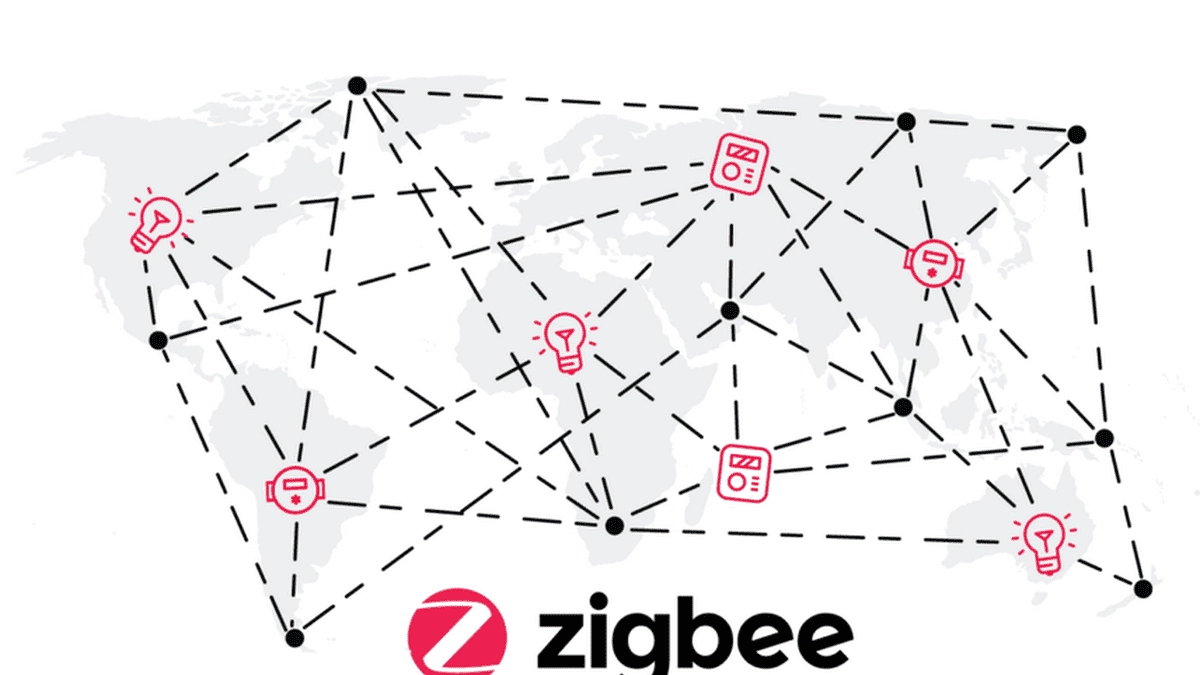
Zigbee is a low-power, low-data-rate wireless communication standard built on top of the IEEE 802.15.4 physical radio standard.
Purpose: Designed for low-power, low-bandwidth applications like smart home sensors, light bulbs, and locks.
Architecture: It relies on a Coordinator (hub/gateway). In most consumer implementations (like Philips Hue or Amazon Echo Plus), there is one main device that acts as the “brain” to create and manage the network.
Interoperability: Because it is a standardized protocol, a Zigbee light switch from Company A should (in theory) work with a Zigbee light bulb from Company B, provided they share the same application profile (like Zigbee 3.0).
3. What is Mesh?
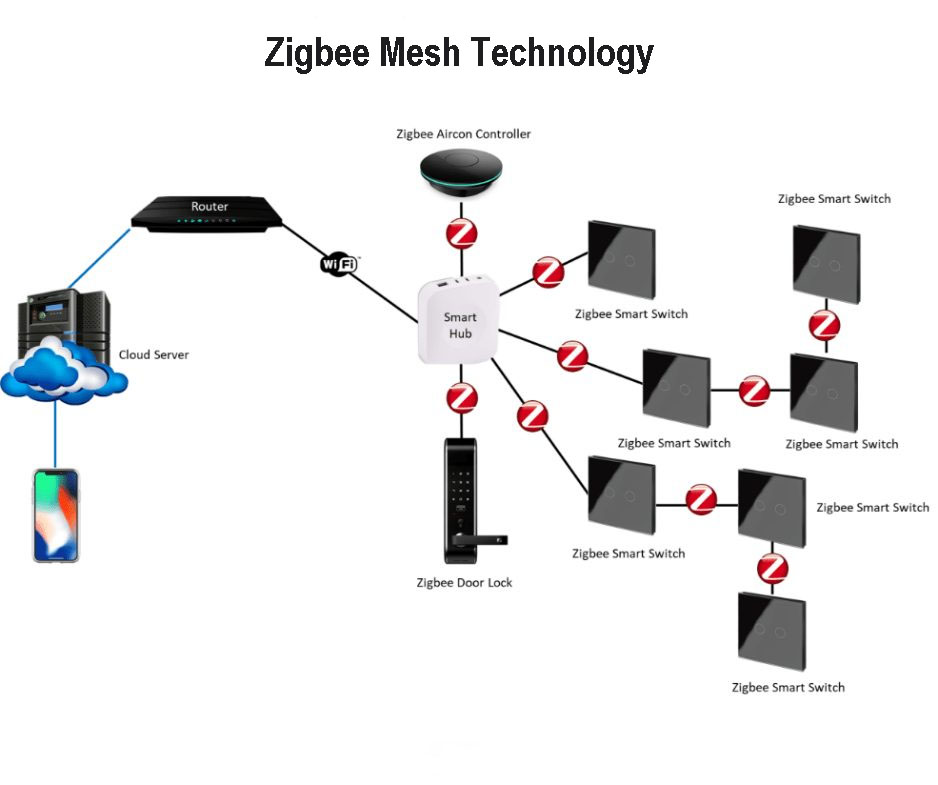
Mesh refers to how devices talk to each other. In a mesh network, every device (or “node”) that is plugged into power can act as a router.
How it works: Instead of every device connecting directly to a central router (like Wi-Fi), devices connect to their nearest neighbor. If one device fails, the network “self-heals” by routing data through a different path.
Not exclusive to Zigbee: Many protocols use mesh networking.
Bluetooth Mesh uses mesh topology but is a different protocol than Zigbee.
Thread (used by Matter, Google Nest, and Amazon Eero) is an IP-based mesh protocol.
Z-Wave uses a mesh topology but operates on a different radio frequency (908.42 MHz in the US) than Zigbee (2.4 GHz).
4. The Relationship
Here is where it gets tricky: Zigbee uses a mesh network.
When you buy a Zigbee device, it is utilizing a mesh topology to extend range and provide redundancy. However, not all mesh networks are Zigbee.
| Feature | Zigbee | Mesh (General Concept) |
| Definition | A specific wireless protocol standard | A network layout/structure |
| Frequency | 2.4 GHz (globally) | Varies (2.4 GHz for BT Mesh/Wi-Fi, Sub-GHz for Z-Wave, etc.) |
| Topology | Primarily Star (hub-to-device) and Mesh | Star, Tree, or Mesh |
| Interoperability | High (if Zigbee 3.0 certified) | Low (just because two devices use “mesh” doesn’t mean they can talk; they must use the same protocol) |
| Examples | Hue lights, Aqara sensors, SmartThings | Zigbee, Z-Wave, Thread, Bluetooth Mesh, Wi-Fi Mesh (e.g., Eero, Orbi) |
5. A Common Confusion: Zigbee vs. Wi-Fi Mesh
Many people confuse Zigbee with “Mesh Wi-Fi systems” (like Google Nest Wi-Fi or Eero).
Mesh Wi-Fi (Eero/Orbi): This is designed to replace your home router. It uses a mesh topology to provide strong, high-bandwidth internet coverage for streaming, gaming, and browsing. These devices operate on the same 2.4GHz and 5GHz bands as traditional Wi-Fi.
Zigbee Mesh: This is designed for low-power Internet of Things (IoT) devices. A Zigbee light bulb does not need 500 Mbps of bandwidth; it needs a reliable, low-energy way to say “turn on.”
Summary
If you are building a smart home:
If a device says it is Zigbee, it means it will likely connect to a specific hub (like a SmartThings station or an Echo Hub) and will act as a repeater (mesh) for other Zigbee devices.
If a device says it is Mesh, you must look at the fine print to see which mesh it uses (Zigbee, Thread, or a proprietary mesh) to know if it will work with your existing system.
Post time: Apr-09-2026


